
Managing Ultrasonic Welding Noise: Enclosures That Work
22 July 2026 · 7 min read · Techspan engineering
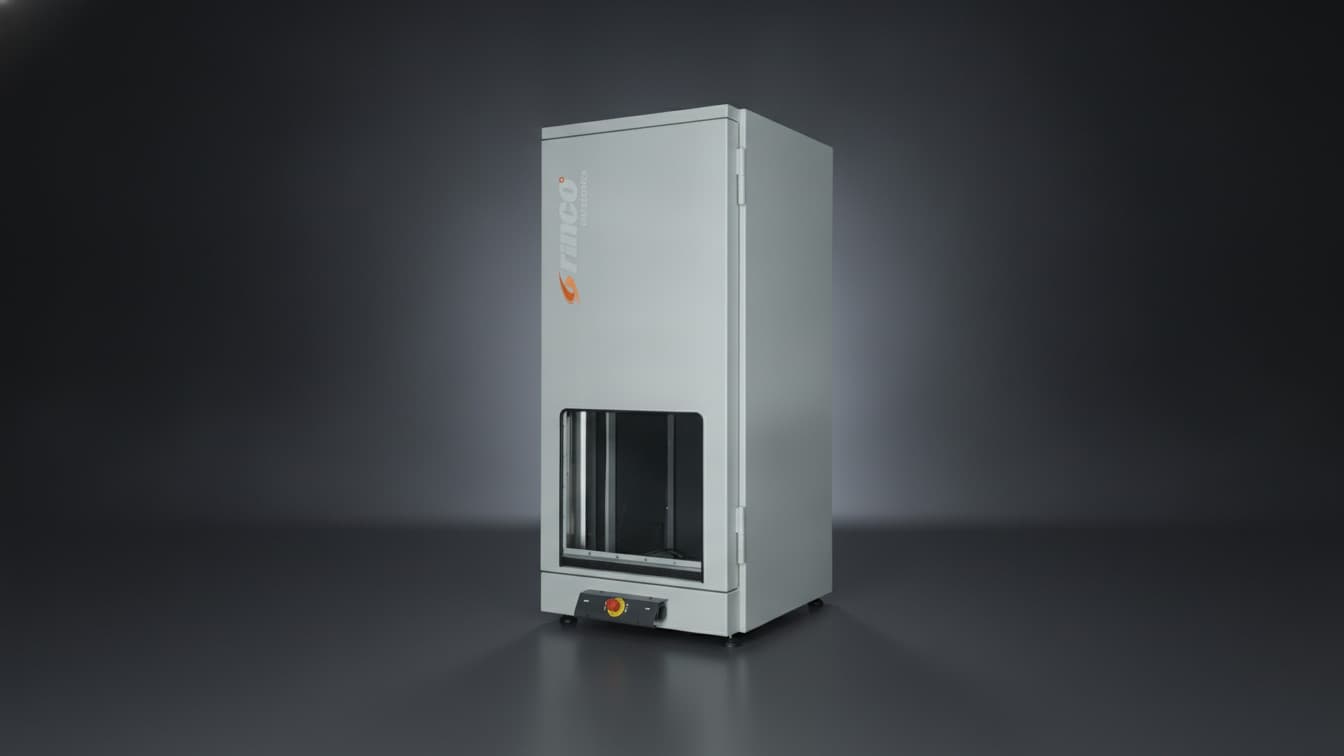
Ask anyone who works near a 20 kHz ultrasonic welder and they will tell you: the "silent" welding process is anything but. The sharp squeal of a weld cycle is one of the most common complaints in assembly areas, and left unmanaged it is a genuine workplace health issue, not just an annoyance. This guide explains where the noise comes from, what the exposure risks are, and the practical options — from part fixturing tweaks to full acoustic workstations — for bringing it under control.
Why a 20 kHz welder is audible at all
Human hearing tops out around 16–20 kHz, and it declines with age. A welder operating at 20 kHz or 35 kHz should, in theory, be inaudible. In practice three things put energy into the audible range:
- Subharmonics. The part, fixture and machine structure do not vibrate only at the drive frequency. Large or unsupported part surfaces flex and re-radiate sound at fractions of the weld frequency — a 20 kHz weld readily excites a strong 10 kHz subharmonic, which sits squarely in the most sensitive region of human hearing. This is the characteristic "scream" of ultrasonic welding.
- Part and fixture resonance. Thin walls, large flat panels and loosely nested parts act like loudspeaker diaphragms. The same part in a well-designed, well-supported nest can be dramatically quieter.
- Process transients. Horn contact, trigger impact and the start of each weld pulse produce broadband noise across the audible spectrum.
As a rule of thumb, 35 kHz machines are noticeably quieter than 20 kHz machines — their subharmonics sit higher, and their amplitudes are lower. It is one reason to consider 35 kHz for small parts even before acoustics enter the discussion.
Workplace noise exposure: the basics
In New Zealand, workplace noise regulations follow the widely used exposure standard: a limit of 85 dB(A) averaged over an eight-hour day, and a peak limit of 140 dB. Employers must manage noise so workers are not exposed above these levels, with engineering controls preferred over personal hearing protection.
Ultrasonic welders matter here for two reasons. First, individual weld cycles can produce short, high-level bursts that are far more irritating — and potentially more harmful — than their eight-hour average suggests. Second, high-frequency audible noise (8–16 kHz) is poorly attenuated by some hearing protection and is subjectively unpleasant even at moderate levels, driving fatigue and complaints well before any exposure limit is breached.
The hierarchy of controls applies as it does everywhere: engineer the noise out first (enclosures, fixturing, frequency selection), then manage exposure (distance, layout, duty), and use hearing protection as the last layer, not the first.
Sound enclosures: the engineering fix
The most effective single measure is to put the weld inside an acoustic enclosure. A well-designed enclosure intercepts the direct sound path and can reduce weld noise at the operator position dramatically — typically bringing a harsh weld down to normal conversation-friendly levels in the room.
Rinco SKK sound enclosures
Rinco's SKK sound enclosures are purpose-built acoustic cabinets for Rinco benchtop welding machines. The welder sits inside an insulated enclosure with an access opening for loading; the acoustic lining absorbs the high-frequency content that hard surfaces would otherwise reflect straight back out. Because they are designed around the machines, integration is straightforward — mounting, cabling and start controls are all accounted for rather than improvised.
Enclosed workstations with automated part handling
For production cells, the smarter approach is to combine acoustics with part handling, so the enclosure never slows the operator down:
- The work station sound enclosure with rotary table pairs an acoustic cabin with a two-position rotary table. The operator loads a nest outside the enclosure while the weld happens inside — noise is contained, hands are always outside the weld zone, and cycle time overlaps loading time.
- The work station sound enclosure with automatic draw uses a powered drawer instead: load the part, the drawer carries it into the enclosure, the weld runs, and the drawer returns. A compact option where floor space is tight.
Both formats deliver a second benefit that is easy to undervalue: guarding. An enclosed weld zone with interlocked access is simultaneously a noise control and a machine-safety control, satisfying two obligations with one piece of equipment.
Practical noise reduction beyond the enclosure
Not every application justifies a full acoustic workstation. These measures all help, and they stack:
- Support the part properly. A rigid, well-fitted nest that supports large surfaces stops panels ringing. This is often the single cheapest improvement available.
- Review the weld settings. Excess amplitude or force beyond what the joint needs adds noise without adding weld quality. Optimising parameters on a modern ultrasonic welder frequently makes the process both quieter and more consistent.
- Consider 35 kHz for small parts. Where the part size allows it, a 35 kHz machine such as the Easy 745 runs at lower amplitude with higher-pitched, less intrusive residual noise than a 20 kHz equivalent.
- Check tooling condition. Cracked or worn horns, loose stud joints and damaged boosters all produce abnormal noise. A stack that suddenly gets louder is telling you something — inspect it.
- Use distance and layout. High-frequency noise is directional and drops quickly with distance and barriers. Position welders away from assembly benches, and avoid pointing open weld zones at workstations.
- Absorb, don't reflect. Hard walls and ceilings around a welding cell bounce high-frequency noise around the room. Local absorptive panels behind and above a welder are cheap and effective.
Measure before you spend
Noise control decisions should start with numbers. A basic sound level meter reading at the operator position — during real production, not an idle machine — tells you how far above comfortable levels the process sits, and a simple before-and-after comparison proves whether a fix worked. For borderline exposure cases, personal dosimetry over a full shift is the defensible measurement. Two practical notes: use a meter that reads honestly at high frequencies, since much ultrasonic welding noise sits at 8–16 kHz where cheap meters roll off; and log which products were running, because noise varies enormously between parts on the same machine. That log often reveals that one or two problem parts account for most of the complaints — and a targeted fixture or enclosure for those parts is far cheaper than treating the whole line.
A note on inaudible ultrasound
Energy at the drive frequency itself — 20 kHz and above — is largely inaudible but still present near the machine. Occupational guidance treats high levels of near-field airborne ultrasound as worth managing, and the same enclosures that control the audible subharmonics also contain the ultrasonic content. In short: solve the audible problem with proper engineering controls and the ultrasonic question is answered along the way.
Talk to Techspan
Techspan supplies and supports the full Rinco range in New Zealand — welders, SKK sound enclosures and complete acoustic workstations with rotary table or automatic draw handling. If weld noise is an issue in your plant, talk to us about your parts, cycle rates and floor layout and we will recommend a setup that keeps both the noise and the cycle time down. Get in touch.